Bree St Cycling Lane Upgrade

Bree St Cycling Lane Upgrade

Paint is not Infrastracture!

Cape Town, Western Cape

To repurpose all class 3 cycling lanes

The Bree Street Cycling Lane Upgrade is a completed Phase 01.1 project delivered as part of the Safe Passage Programme, funded by SDI Trust and led by Young Urbanists. The project originated from the Active Mobility Forum, a programme of Young Urbanists, working with the Executive Mayor and Mayoral Committee Member for Urban Mobility, Roberto Quintas, to move away from paint as infrastructure and advocate for protected cycling infrastructure as a standard part of road upgrades.

This work supported a major policy win in the City’s Comprehensive Integrated Transport Plan, which called for priority consideration to be given to cycling lanes on high volume and high speed routes that are separated from vehicle traffic. This helped create the policy foundation for the City’s Walking and Cycling Strategy, which continues to shape how Cape Town thinks about safer, more inclusive mobility.

After the policy reform, the project set out to demonstrate two things in practice. First, how existing Class 3 painted cycling lanes could be upgraded into protected lanes using low cost, removable infrastructure. Second, how the private sector could help fund cycling lane upgrades as part of road safety implementation.

Bree Street was selected because it forms part of the formal cycling network connecting Langa to the Cape Town CBD. It also supports last mile delivery workers, including more than 200 Green Riders who regularly move through the CBD by e-bike, with a key hub located off Bree Street on Shortmarket Street.

Young Urbanists worked with the City of Cape Town’s Urban Mobility Directorate, Transport Planning, Network Management and RIM District to develop an affordable removable concrete kerb for lane delineation. Inspired by MyCiTi red bus lane delineation, the system was adapted into a removable form for cycling infrastructure. Young Urbanists helped pay for the mould and research and development, allowing the kerbs to be procured for the pilot and later used in other projects, including the Bree Street Experiment and Safe Mobility Hub protected motorcycle bays.

The upgrade has helped shift institutional practice. The City has since written similar thinking into its Roads and Stormwater guidelines, and is preparing its own upgrade of Granger Bay Boulevard. The project shows how tactical delivery can influence policy, technical standards and long term public infrastructure.

Next steps include upgrading Albert Road to help complete the Safe Passage route, bringing the model to Masiphumelele as part of Safe Passage 02, and releasing a map and toolkit to support wider implementation. The approach is also being explored beyond Cape Town, including work in Rosebank with Intaprop on a protected bi-directional cycling lane and engagement with the City of Johannesburg around upgrading its wider network of painted cycling lanes.

A special thanks goes to Hayden Malan, who developed the first concept work for Bree Street and other routes such as Albert Road, and to the City of Cape Town (RIM) for helping translate the concept into a technical document.
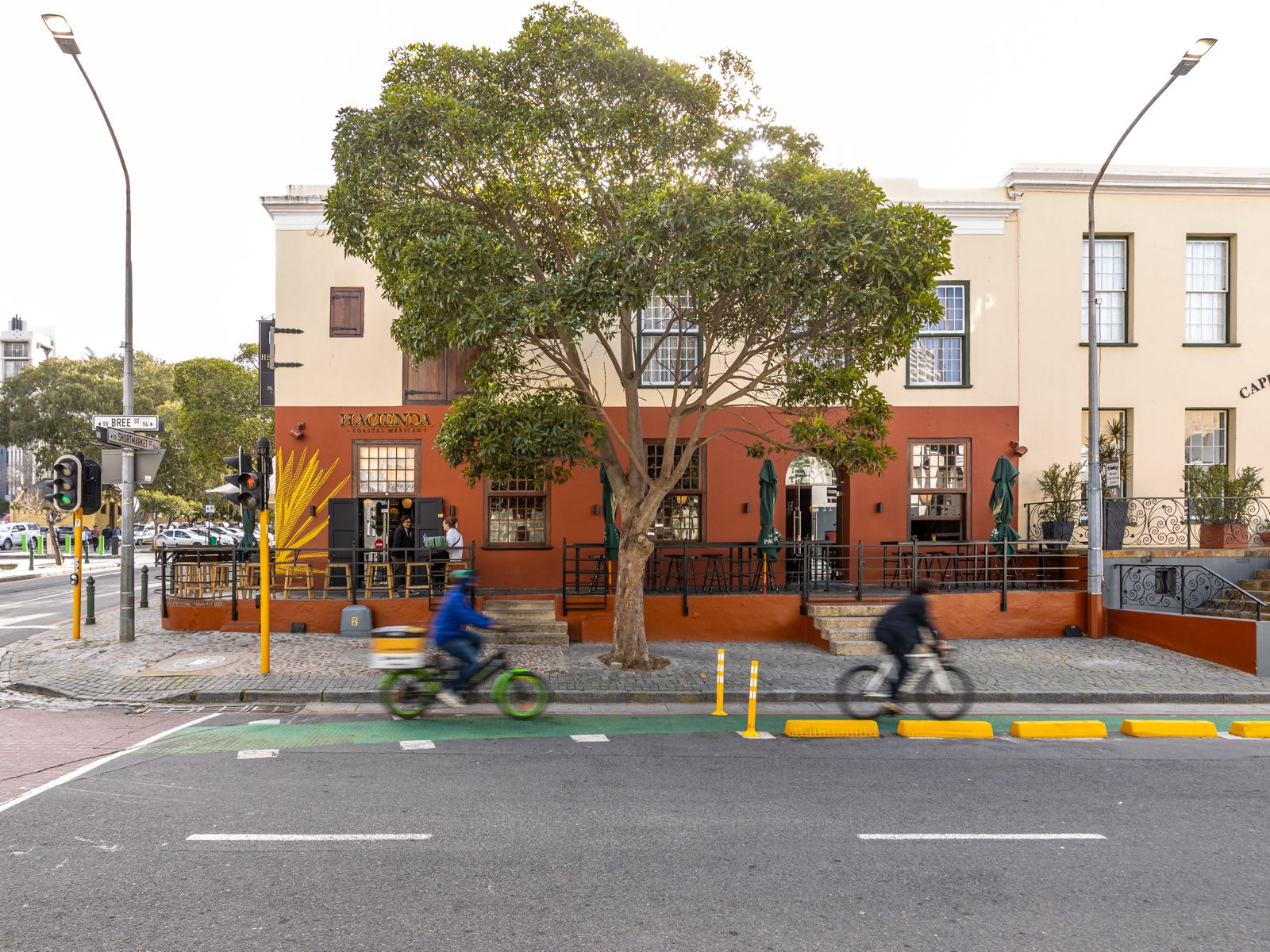

The Bree Street Cycling Lane Upgrade is a completed Phase 01.1 project delivered as part of the Safe Passage Programme, funded by SDI Trust and led by Young Urbanists. The project originated from the Active Mobility Forum, a programme of Young Urbanists, working with the Executive Mayor and Mayoral Committee Member for Urban Mobility, Roberto Quintas, to move away from paint as infrastructure and advocate for protected cycling infrastructure as a standard part of road upgrades.

This work supported a major policy win in the City’s Comprehensive Integrated Transport Plan, which called for priority consideration to be given to cycling lanes on high volume and high speed routes that are separated from vehicle traffic. This helped create the policy foundation for the City’s Walking and Cycling Strategy, which continues to shape how Cape Town thinks about safer, more inclusive mobility.

After the policy reform, the project set out to demonstrate two things in practice. First, how existing Class 3 painted cycling lanes could be upgraded into protected lanes using low cost, removable infrastructure. Second, how the private sector could help fund cycling lane upgrades as part of road safety implementation.

Bree Street was selected because it forms part of the formal cycling network connecting Langa to the Cape Town CBD. It also supports last mile delivery workers, including more than 200 Green Riders who regularly move through the CBD by e-bike, with a key hub located off Bree Street on Shortmarket Street.

Young Urbanists worked with the City of Cape Town’s Urban Mobility Directorate, Transport Planning, Network Management and RIM District to develop an affordable removable concrete kerb for lane delineation. Inspired by MyCiTi red bus lane delineation, the system was adapted into a removable form for cycling infrastructure. Young Urbanists helped pay for the mould and research and development, allowing the kerbs to be procured for the pilot and later used in other projects, including the Bree Street Experiment and Safe Mobility Hub protected motorcycle bays.

The upgrade has helped shift institutional practice. The City has since written similar thinking into its Roads and Stormwater guidelines, and is preparing its own upgrade of Granger Bay Boulevard. The project shows how tactical delivery can influence policy, technical standards and long term public infrastructure.

Next steps include upgrading Albert Road to help complete the Safe Passage route, bringing the model to Masiphumelele as part of Safe Passage 02, and releasing a map and toolkit to support wider implementation. The approach is also being explored beyond Cape Town, including work in Rosebank with Intaprop on a protected bi-directional cycling lane and engagement with the City of Johannesburg around upgrading its wider network of painted cycling lanes.

A special thanks goes to Hayden Malan, who developed the first concept work for Bree Street and other routes such as Albert Road, and to the City of Cape Town (RIM) for helping translate the concept into a technical document.

The Bree Street Cycling Lane Upgrade is a Phase 01.1 Safe Passage project led by Young Urbanists and funded by SDI Trust, originating from the Active Mobility Forum’s push for protected cycling infrastructure. It upgraded a painted lane using low cost removable kerbs developed with the City of Cape Town, supporting a key policy shift toward protected lanes. Located on a core route linking Langa to the CBD and used by over 200 Green Riders, it provides a scalable model for safer cycling infrastructure.

Toolkit coming soon Map coming soon

CITY OF CAPE TOWN Cycle lanes along the bustling Bree Street upgraded

Young Urbanists, Active Mobility Forum, Hayden Malan, SDI Trust, Safe Passage Programme, Gerhard Higte, Gershwin Fortune, Safe Passage Programme, City of Cape Town Urban Mobility Directorate, Transport Planning, MAROL, Network Management, Roads Infrastructure Management District, Office of the Executive Mayor, Mayoral Committee Member for Urban Mobility Roberto Quintas, Green Riders, Intaprop and City of Johannesburg

HOW TO GET INVOLVED OR SUPPORT US

Donate
Become a member
Volunteer
Join our WhatsApp community
Subscribe to our Substack

Want to talk?

Want to talk?

Call Roland 076 451 8656

Call Roland 076 451 8656

Community/Education/Change

roland@youngurbanist.co.za

Toolkit coming soon Map coming soon

We Advocate for Infrastructure, not paint. Fueled by Young Urbanists and the Bicycle Mayor of Cape Town

Become a Member

Join Young Urbanists as a member or support our movement

© Young Urbanists NPC South Africa 2026 | +27 76 451 8656

Become a Member

Join Young Urbanists as a member or donate our movement

© Young Urbanists NPC South Africa 2026 | +27 76 451 8656

Create a free website with Framer, the website builder loved by startups, designers and agencies.